.png)
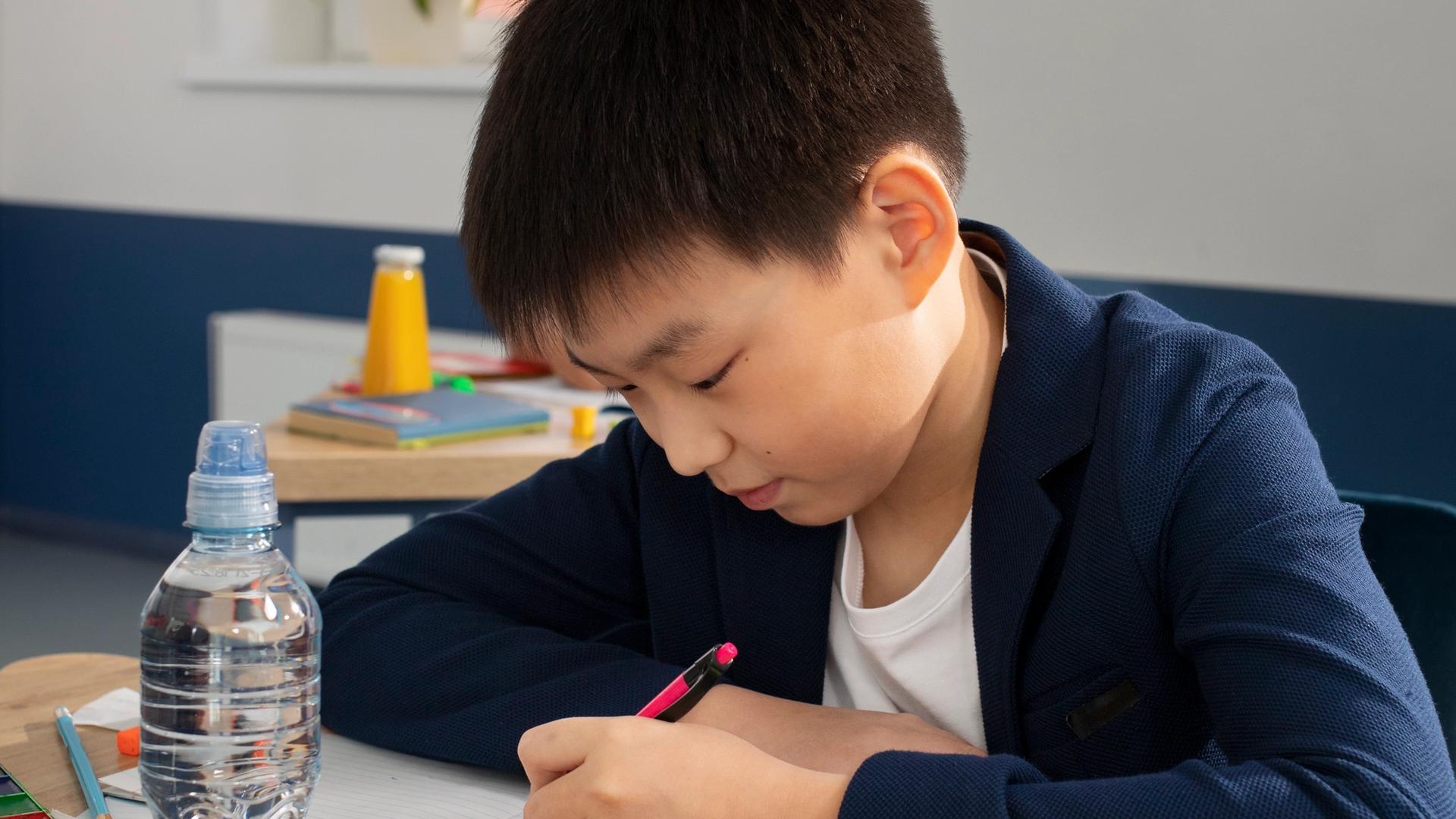
Why Model Drawing Matters in PSLE Math
Let’s be real — PSLE Math gets stressful fast once problem sums start looking more like puzzles than sums. You can watch your child handle multiplication and fractions just fine, then suddenly freeze when the question turns into a long paragraph. That’s exactly why model drawing matters. It gives children a visual way to organise the information before they start calculating, and it sits right at the heart of strong problem-solving within PSLE Math Strategies.
Here’s the thing: many children do not struggle because they are weak in Maths. They struggle because they cannot see the relationship between the numbers in the question. A model helps slow that process down. Instead of guessing which operation to use, your child learns to map out who has more, what was added, what was taken away, and what the unknown actually is.
This matters in PSLE because problem sums often test understanding, not just speed. A child who rushes into a number sentence too early can lose marks even after doing plenty of practice. Model drawing builds the habit of thinking first. That makes it useful not only for scoring, but also for confidence. Once your child can “see” the question, it stops feeling so intimidating.
You’re not alone if this method feels unfamiliar, especially if you did not learn Maths this way in school. But honestly, that can be an advantage. You do not need to memorise school jargon to support your child. You just need to understand what the model is trying to show — and that makes the next steps much easier.
What Model Drawing Actually Means
Model drawing is a way of turning a word problem into a picture made of bars. Each bar stands for a quantity, and the size or arrangement of the bars shows how those quantities are related. Instead of trying to hold every detail in your head, your child puts the information on paper in a form that is easier to follow.
In PSLE Math, this method is especially useful because many problem sums are really about relationships. One person may have more than another. A total may be split into equal parts. A quantity may change after buying, giving away, or adding more. When a child draws bars for those quantities, the structure of the question becomes clearer. They can see the gap, the whole, or the missing part before choosing an operation.
That is the real point of model drawing. It is not just decoration, and it is not about producing a beautiful sketch. The drawing only needs to be neat enough to show the relationship clearly. A simple bar with the right labels is far more useful than a messy page full of arrows and crossed-out numbers.
Parents sometimes worry that model drawing makes Maths slower. In the beginning, it can. Your child is learning a process, so it naturally takes longer at first. But once the method becomes familiar, it often saves time because there is less guessing. Instead of jumping from one operation to another, your child has a clear plan.
You can think of model drawing as a bridge between understanding the story and solving the sum. If the bridge is strong, the calculation becomes much more straightforward.
When Your Child Should Use Model Drawing
Model drawing works best when the question is really testing relationships between quantities. That usually means problem sums where your child has to work out how parts fit into a whole, how two amounts compare, or how a quantity changes after something happens. Once your child learns to spot those patterns, deciding whether to draw a model becomes much easier.
One common type is the part-whole question. This is where several parts combine to make a total, and one part is missing. A bar model helps your child see the full amount and how it is split. Another common type is the comparison question, where one person has more or less than another. In these sums, the extra segment in the model often shows the exact difference that matters.
Model drawing is also useful for before-and-after questions. These are the ones where a quantity changes because something was added, spent, shared, or removed. Children often get lost because they mix up the starting amount and the final amount. A simple bar model helps separate the stages clearly.
Then there are equal sharing and grouping questions. These appear when an amount is divided equally, or when several units make up a total. A model makes it easier to see how many equal parts there are and what each part represents. It also helps with many fraction questions, especially when the fraction describes part of a whole or when two quantities are compared using fractional language.
That said, model drawing is not the only visual tool your child needs in PSLE Math. Some topics rely more on shapes, dimensions, and spatial thinking, which is where articles like PSLE Math: Geometry and Area Made Simple become useful alongside problem-sum methods. The goal is not to force model drawing into every question. The goal is to recognise when it clarifies the relationship and when another approach fits better.
Tip: Ask your child, “What is this question comparing or splitting?” If they can answer that clearly, they can usually decide whether a model will help.
How to Draw a Model Step by Step
A good model drawing process is simple, but it needs to be consistent. Children often get stuck not because the question is impossible, but because they rush straight into calculations. The fix is not “practise more” on its own. It is practising the same thinking steps every time until they become automatic.
Read the question carefully
Start by slowing the question down. Ask your child to underline who or what the question is about, circle the numbers given, and identify what must be found. If they skip this, the model usually goes wrong before the pencil even touches the paper.
Decide what each bar represents
Next, choose the main quantities and draw bars for them. Each bar should stand for one complete amount. If two people have related amounts, draw two bars. If one total is split into parts, draw one long bar with sections. At this stage, neatness matters more than detail. The bars should be easy to compare visually.
Label the known values
Then add the numbers that the question already gives. Put them on the correct part of the model, not randomly around it. A missing label creates confusion later, especially in multi-step sums. This is where many children realise they misunderstood the question, which is actually useful. Better to catch it now than after writing the wrong number sentence.
Mark the unknown
Once the known values are in place, mark the missing part clearly. A question mark or blank box works well. Your child should be able to point to the exact section that represents the answer. If they cannot do that, they probably do not yet understand the relationship in the question.
Write the number sentence
Only after the model is clear should your child move to calculation. The number sentence should come from the picture, not from guesswork. That shift is what makes model drawing powerful. It trains your child to solve with logic instead of impulse.
Over time, this routine helps your child become calmer under exam pressure. They stop seeing problem sums as wordy traps and start seeing them as patterns they know how to unpack.
Worked Examples of PSLE Math Model Drawing
This is where model drawing starts to feel less abstract. Once your child sees how the bars match the wording of the question, the method becomes much easier to trust. The key is not to memorise one fixed diagram. It is to notice the relationship first, then build the model around it.
Comparison problem
Ben has 28 stickers. Amir has 12 more stickers than Ben. How many stickers do they have altogether?
Start with one bar for Ben: 28. Then draw a second bar for Amir that matches Ben’s 28, plus one extra segment labelled 12. That immediately shows that Amir has $28 + 12 = 40$ stickers. After that, the total is straightforward: $28 + 40 = 68$.
What matters here is that the model prevents a common mistake. Some children see the word “altogether” and add 28 and 12 straight away. The bars show that 12 is not Amir’s total. It is only the extra part.
Part-whole problem
A box contains 75 beads. 29 are red and the rest are blue. How many blue beads are there?
Draw one long bar for the total, 75. Split it into two parts: one labelled 29 for red beads, and one unknown part for blue beads. The model shows instantly that the blue section is what remains after removing the red section. So the calculation is $75 - 29 = 46$.
This kind of question looks simple, but the model still helps because it keeps the child focused on the relationship between the whole and the missing part.
Fraction problem
Sarah spent of her money and had $24 left. How much money did she have at first?
This is where model drawing becomes especially useful. Draw one bar divided into 3 equal parts. Since Sarah spent , the remaining money is . Label those 2 remaining parts as \12, so 3 parts must be $36.
Without the model, many children do not know whether to multiply or divide first. The bar makes that clear. It shows that $24 does not represent the whole amount. It represents 2 equal parts.
That is why worked examples matter so much in PSLE Preparation. They do more than teach answers. They train your child to map words to structure. Once that clicks, even unfamiliar problem sums become less scary.
Common Model Drawing Mistakes That Cost Marks
Model drawing helps only when the drawing matches the logic of the question. That sounds obvious, but this is where many children lose marks. They remember that they are “supposed to draw a model”, but they do it mechanically. The result is a diagram that looks busy without actually helping.
Bars do not match the relationship
This is one of the biggest problems. A child may draw two equal bars even though one amount is clearly larger, or add an extra section in the wrong place. Once the relationship is wrong, every calculation after that is built on a weak foundation. Encourage your child to pause and ask, “Does this bar really show who has more, less, or the total?”
Labels are missing or unclear
A neat model with missing labels is still a weak model. Children sometimes write numbers beside the bars without showing what those numbers refer to. That becomes risky in multi-step questions because they can no longer tell which segment stands for the total, the difference, or the unknown. Clear labels make the thinking visible.
Solving too early
Some children start calculating the moment they spot familiar numbers. That habit leads to careless operation choices. They may subtract when they should compare first, or add parts that do not belong together yet. The model is supposed to slow that impulse down. If your child keeps jumping ahead, cover the calculator mindset completely and insist on finishing the diagram first.
Using model drawing for the wrong question type
Not every PSLE Math question needs a bar model. Sometimes a straightforward number sentence is enough. Sometimes a table, pattern, or diagram works better. If your child tries to force model drawing into everything, frustration builds quickly. That is why emotional support matters as much as method. If your child is already tense, even a helpful strategy can start to feel like another burden, which is where broader support around Supporting Your Child Through Exam Stress: A Parent's Guide becomes relevant.
Tip: When checking homework, do not ask only, “Is the answer correct?” Ask, “Does the model prove why the answer makes sense?” That question builds much stronger habits.
How Parents Can Help Without Making Practice Stressful
You do not need to reteach the whole topic at home to be helpful. In fact, that usually backfires. If every practice session turns into a mini lesson from scratch, your child can end up more confused and more resistant. A better approach is to support the process instead of taking over the solving.
Start by asking your child to explain the question in their own words. Then ask what each bar in the model stands for. This keeps the focus on understanding, not just getting the final answer quickly. If they are stuck, resist the urge to point straight to the operation. Prompt them with questions like, “What is the whole here?” or “Which part is missing?” That keeps the thinking with them.
It also helps to keep practice short and regular. One or two well-chosen problem sums done carefully can do more than a long session filled with rushing and frustration. Here’s the thing: consistency usually beats intensity for this kind of skill. Children get better at model drawing when they see similar structures repeatedly over time.
If your child is still struggling despite regular practice, more targeted support may help. In some cases, primary school tuition can give your child the structure and guided feedback needed to make the method click without turning home practice into a daily battle.
Most importantly, keep the emotional tone steady. If your child gets one model wrong, that is not failure. It is useful information. It shows exactly where the misunderstanding is, which means you now know what to fix next.
What to Remember Before the Exam
By the time PSLE comes around, your child does not need a perfect model for every single question. What they need is a reliable way to understand relationships before calculating. That is the real value of model drawing. It turns a confusing paragraph into something concrete and manageable.
If your child can slow down, identify the whole and the parts, label the bars clearly, and only then write the number sentence, they are already in a much stronger position. That habit matters across the wider PSLE Complete Guide journey too, because confidence in problem-solving often carries into revision, pacing, and exam composure.
The truth is, model drawing is not magic. It will not replace careful reading or regular practice. But it does give your child a method they can fall back on under pressure, and that alone can make PSLE Math feel far less overwhelming.
Ready to find the right tutor for your child? Our matching service connects you with experienced tutors who fit your specific needs.
Get Matched with a Tutor in 24 Hours
Join 5,000+ families who found their perfect tutor through TutorBee. No agency fees, 100% verified tutors.
Related Articles

PSLE Math: Mastering Fractions and Ratios
Master PSLE Math fractions and ratios with proven techniques. Covers conversions, word problems, and the fraction-ratio connection that trips up most P6 students.
PSLE Higher Chinese: Is It Worth Taking?
PSLE Higher Chinese can support SAP school options and later language pathways. Learn when the added workload makes sense for you or your child in Primary 6.

PSLE English Paper 1 vs Paper 2: What's Tested
PSLE English Paper 1 vs Paper 2 can confuse many parents. This guide explains what each paper tests, how they differ, and where children often lose marks.