.png)

Composition writing is often the most challenging — and most dreaded — part of PSLE English. Many students struggle because they've never been taught a systematic approach. This guide breaks down exactly what markers look for and how your child can deliver it. If exam stress is already building, having a clear system for compositions can take some of that pressure off.
Understanding the PSLE Composition Format
Students are given three or four picture-based prompts and must choose one to write about. The composition carries significant weightage, typically 40 marks out of the total English paper.
Time management is crucial: With about 50 minutes for the composition, students need to plan efficiently while leaving enough time for writing and checking.
What Markers Actually Look For
Content (Ideas and Development)
Markers want to see relevant, interesting ideas that are well-developed — not just listed. A story about "a time I helped someone" shouldn't just describe the help; it should explore feelings, obstacles, and impact.
Organisation (Structure)
Good compositions have clear beginnings, middles, and endings. Events flow logically, and paragraphing helps readers follow the story.
Language (Vocabulary and Sentence Structure)
This doesn't mean using the biggest words possible. It means choosing precise, appropriate vocabulary and varying sentence structures to create rhythm and interest.
Grammar and Spelling
Technical accuracy matters. Consistent tense, correct subject-verb agreement, and proper spelling demonstrate language competence.
The Pre-Writing Phase
Choosing Your Picture
Don't rush this decision. Consider each option and ask:
- Do I have a clear story idea for this picture?
- Can I think of specific details and emotions to include?
- Does this picture allow me to show my vocabulary strengths?
The best choice isn't always the "easiest" picture — it's the one that inspires your best writing.
Planning Your Story
Spend 5–7 minutes planning. This investment pays off enormously.
A simple planning structure:
- Opening hook — How will you grab attention?
- Build-up — What sets up the main event?
- Main event — What happens?
- Complication — What goes wrong or creates tension?
- Resolution — How is it resolved?
- Reflection — What was learned or how did things change?
Don't start writing until you know your ending. Many students run out of ideas mid-story because they didn't plan ahead.
Crafting a Strong Opening
Avoid Cliché Beginnings
These openings bore markers immediately:
- "One fine day..."
- "It was a bright and sunny morning..."
- "Hello, my name is..."
Better Opening Techniques
Start with action: "The ball slipped through my fingers. Before I could react, it bounced twice and rolled straight into the storm drain."
Start with dialogue: "'Don't touch that!' screamed my mother. But it was too late."
Start with emotion or sensation: "My heart pounded so loudly I was sure everyone could hear it. This was the moment I had been dreading for weeks."
Start with a surprising statement: "I never thought I would be grateful for missing the bus. But that Thursday changed everything."
Building the Middle
Show, Don't Tell
Instead of: "I was very scared."
Write: "My hands trembled as I reached for the door handle. Cold sweat trickled down my spine, and my legs felt like jelly."
Instead of: "She was angry."
Write: "Her jaw tightened. She crossed her arms and glared at me with eyes that could melt steel."
Use Specific Details
Vague writing: "The food looked delicious."
Specific writing: "Steam rose from the curry puff, and the golden-brown pastry glistened under the hawker centre lights."
Specific details make writing vivid and memorable.
Create Meaningful Dialogue
Dialogue breaks up narration and reveals character. But avoid:
- Long, unrealistic conversations
- Dialogue that doesn't move the story forward
- Forgetting proper punctuation
Good dialogue example: "We need to go back," whispered Mei Ling, tugging my sleeve. "But the treasure—" "Forget the treasure. Listen." That's when I heard it too. Footsteps. And they were getting closer.
Crafting a Satisfying Ending
Endings That Work
The reflection ending: "As I walked home that evening, I realised that courage isn't about not being afraid. It's about doing the right thing even when your knees are shaking."
The full-circle ending: Returns to something from the opening, creating a sense of completion.
The lesson-learned ending: Clearly shows character growth or new understanding.
Endings to Avoid
- "It was all a dream" (undermines entire story)
- Abrupt endings without resolution
- Introducing new events in the final paragraph
- Simply stating "I learned my lesson"
Vocabulary That Impresses
Upgrade Common Words
Instead of "happy," try: elated, overjoyed, thrilled, delighted, ecstatic
Instead of "sad," try: dejected, heartbroken, crestfallen, despondent, melancholy
Instead of "said," try: exclaimed, whispered, muttered, stammered, declared, announced
Instead of "nice," try: pleasant, delightful, wonderful, charming, splendid
Use Phrases and Idioms Appropriately
Well-placed phrases show language maturity:
- "My heart sank"
- "Time flew by"
- "A blessing in disguise"
- "At the eleventh hour"
- "A weight lifted off my shoulders"
But only use phrases you understand fully — incorrect usage is worse than simple vocabulary.
Common Mistakes to Avoid
Story Mistakes
- Unrealistic plots: Unless the picture suggests fantasy, keep stories believable
- Too many events: Focus on one main incident, developed well
- No conflict: Stories need tension or problems to be interesting
- Forgetting the picture: Make sure your story connects to the prompt
Language Mistakes
- Tense switching: If you start in past tense, stay in past tense
- Run-on sentences: Keep sentences manageable
- Overusing adjectives: Two good adjectives beat five average ones
Structural Mistakes
- No paragraphs: New speakers and new events need new paragraphs
- Unbalanced length: Don't spend 80% on set-up and rush the ending
Struggling with compositions? A tutor who understands the PSLE English format can help your child build a writing system that works. TutorBee's matching is free for parents.
Get matched with an English tutor →
Practice Strategies
Write Regularly
Aim for at least one full composition per week. Time yourself to build exam-day stamina. Using active recall — testing yourself on vocabulary and story structures from memory — builds stronger retention than simply re-reading notes.
Read Widely
Good writers read extensively. Stories, age-appropriate novels, even quality comics expose your child to different styles and vocabulary.
Build a Vocabulary Bank
Keep a notebook of interesting words and phrases. Review it regularly using spaced repetition — revisiting words at increasing intervals so they actually stick long-term. Practise using new words in sentences, not just memorising definitions.
Learn From Feedback
When compositions are marked, don't just look at the grade. Understand why certain parts worked and others didn't. If your child is preparing for English tuition, sharing marked compositions with the tutor gives them a clear picture of what needs work.
A Note for Parents
Your role isn't to write compositions for your child or correct every error. Instead:
- Encourage reading for pleasure
- Discuss stories together (What did you like? What would you change?)
- Celebrate effort and improvement, not just marks
- If you notice your child struggling with learning confidence, adjusting the approach to match how they learn can make a real difference
What Comes Next
PSLE composition success comes from consistent practice, wide reading, and understanding what markers look for. There are no shortcuts, but with the right approach, every student can improve significantly.
When your child moves to secondary school, the writing demands shift — our O-Level English guide covers everything from situational writing to comprehension strategies, so they'll know what's ahead.
Frequently Asked Questions
How many words should a PSLE composition be? Aim for 150–200 words as a minimum, but most strong compositions are 250–350 words. Quality matters more than length — a well-developed 250-word story will outscore a rushed 400-word one. Focus on showing, not telling, and developing your ideas fully.
How can I help my child improve at composition writing? Read together regularly, discuss what makes stories interesting, and encourage your child to write one full composition a week. Don't correct every mistake yourself — let them learn from marker feedback. A systematic approach with a tutor experienced in PSLE English can accelerate progress.
Should my child use model composition books? Model compositions are useful for learning techniques — strong openings, descriptive phrases, story structures. But copying or memorising full essays is counterproductive. Markers can spot recycled stories, and it doesn't build real writing skill. Use model books as inspiration, not templates.
What's the difference between continuous writing and situational writing at PSLE? PSLE Paper 1 has two parts: situational writing (functional text like letters or emails, ~15 marks) and continuous writing (compositions based on picture prompts, ~40 marks). This guide focuses on continuous writing — the larger, higher-stakes section.
How important is handwriting in PSLE composition? Handwriting isn't formally marked, but legibility matters. If the marker can't read your child's writing easily, it creates a negative impression and they may miss good content. Practise writing neatly at speed — not calligraphy, just clear and consistent.
Get Matched with a Tutor in 24 Hours
Join 5,000+ families who found their perfect tutor through TutorBee. No agency fees, 100% verified tutors.
Related Articles

PSLE Math: Mastering Fractions and Ratios
Master PSLE Math fractions and ratios with proven techniques. Covers conversions, word problems, and the fraction-ratio connection that trips up most P6 students.
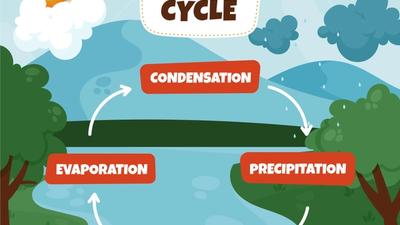
PSLE Science: Water Cycle and Weather
PSLE water cycle and weather can feel confusing at first. This guide explains the key processes, question types, and revision points clearly.

PSLE Higher Chinese: Is It Worth Taking?
PSLE Higher Chinese can support SAP school options and later language pathways. Learn when the added workload makes sense for you or your child in Primary 6.