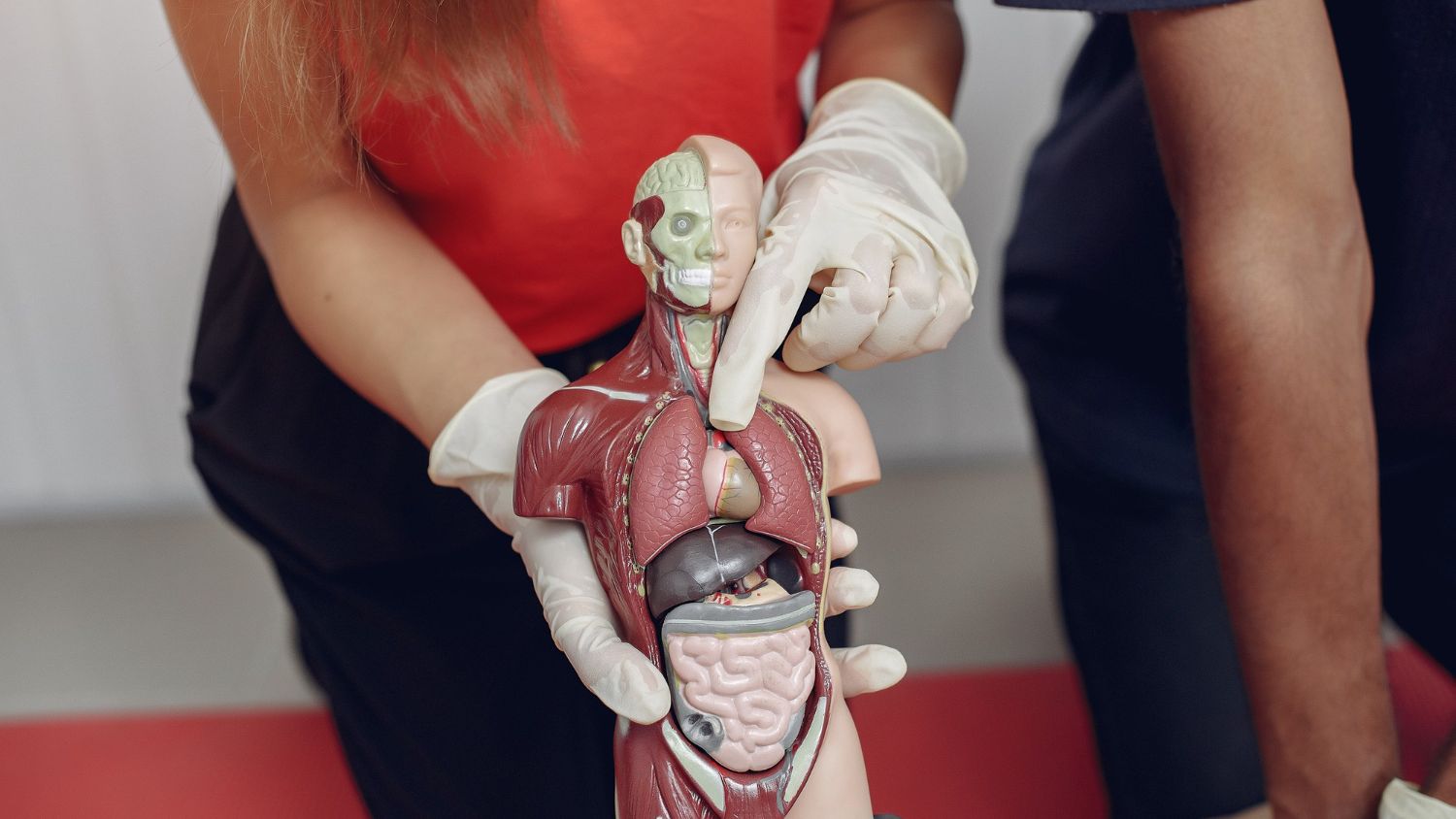
Let’s be real: most Sec 3–4 students don’t struggle because Biology is “too hard”. They struggle because everything feels like separate chapters — digestion, breathing, blood, kidneys — and they can’t see the story.
This guide is your O-Level Biology human body systems map. Use it as a reference while revising the wider O-Level Complete Guide so you always know where each system fits and why it matters.
The one story that links all the systems
Here’s the simplest way to see the connections:
- Digestive system breaks food into small, soluble molecules.
- Circulatory system transports those molecules (and oxygen) to cells.
- Respiratory system brings in oxygen for aerobic respiration.
- Excretory system removes metabolic wastes and helps regulate water/ions.
- Nervous + endocrine systems coordinate and keep internal conditions stable.
If you can explain this story clearly, you’re already ahead — because many structured questions are basically “explain the link” in disguise.
Where this topic sits in O-Level revision
“Human body systems” isn’t just a checklist of organs. Exam questions often test whether you can:
- Define and distinguish key processes (common traps include mixing up assimilation, respiration, egestion and excretion).
- Link structure to function (e.g., why alveoli are efficient for diffusion; why valves prevent backflow).
- Connect systems (e.g., digestion → transport → respiration → waste removal).
If you’re revising across multiple Science subjects, anchor this topic inside the O-Level Sciences so your schedule stays balanced.
System 1: Digestive system (nutrition in humans)
Think of digestion as a conversion process: large, insoluble food molecules become small, soluble molecules that can be absorbed.
The journey (high-yield version)
- Ingestion: taking food in.
- Digestion: breaking down food (mechanical + chemical digestion).
- Absorption: digested food moves into the bloodstream (mainly in the small intestine).
- Assimilation: absorbed molecules are used by cells for growth, repair or energy.
- Egestion: undigested material leaves the body as faeces.
Exam trap: assimilation vs egestion vs excretion
Students lose marks by using the right word in the wrong place. Use this quick distinction:
- Assimilation: use of absorbed nutrients by cells.
- Egestion: removal of undigested food (faeces).
- Excretion: removal of metabolic wastes made by cells (e.g., carbon dioxide, urea).
If you’re unsure, ask yourself: “Did a cell make this waste?” If yes, it’s excretion.
System 2: Circulatory system (transport)
Here’s the thing: the circulatory system is the delivery service that makes the other systems meaningful.
What blood transports (the essentials)
- Oxygen from lungs to body cells
- Glucose and amino acids from the small intestine to cells (and to the liver first, depending on the route taught)
- Carbon dioxide from cells to lungs
- Urea from liver to kidneys
- Hormones from endocrine glands to target organs
- Heat around the body (temperature regulation)
The link that examiners love
Digestion → absorption → transport:
- Food is digested and absorbed into blood.
- Blood carries nutrients to cells.
- Cells use those nutrients (often in respiration).
A common structured question asks you to explain why a good blood supply matters to an organ. Your answer should be: fast delivery of needed substances + fast removal of wastes.
System 3: Respiratory system (gas exchange + respiration)
One of the most common O-Level confusions is mixing up breathing, gas exchange, and respiration.
Gas exchange (lungs): what happens and where
Gas exchange is the movement of gases by diffusion:
- Oxygen moves from alveoli into blood.
- Carbon dioxide moves from blood into alveoli.
Marks often come from linking structure to function. High-yield alveoli features:
- Large surface area
- Thin walls (short diffusion distance)
- Moist lining (gases dissolve)
- Good blood supply (maintains concentration gradient)
Respiration (cells): what it really means
Respiration is a chemical reaction in cells that releases energy.
- Aerobic respiration uses oxygen and releases energy.
- Students don’t need to memorise a fancy paragraph; they need to state clearly: glucose + oxygen → carbon dioxide + water + energy.
If you write the equation, keep it in proper notation:
TB_MATH_BLOCK_0
Applied angle (often tested): smoking
If a question mentions smoking, it’s usually pointing at:
- damaged alveoli → reduced surface area
- blocked airways → reduced airflow
- less efficient gas exchange → lower oxygen uptake → reduced stamina/health impacts
Keep it factual and linked to gas exchange efficiency.
System 4: Excretory system (kidneys + regulation)
Excretion removes metabolic waste. In humans, a core focus is how kidneys remove urea and regulate water and mineral ions.
What counts as excretion (examples)
- Carbon dioxide (lungs)
- Urea (kidneys, removed in urine)
- Excess water and salts (kidneys; also sweat is sometimes mentioned, depending on framing)
Why kidneys are always linked to homeostasis
Homeostasis is about keeping internal conditions stable. Kidneys help by controlling:
- water balance (osmoregulation)
- salt/ion levels
So if an exam question asks how the body prevents dehydration, kidneys are usually in the answer, alongside sensible behavioural responses (drink water).
System 5: Coordination and response (nervous + endocrine)
Body systems don’t run on autopilot. The nervous and endocrine systems are the control layer.
Nervous system (fast, precise)
- Electrical impulses
- Quick responses
- Often linked to reflex actions and coordinating movement
Endocrine system (slower, longer-lasting)
- Hormones carried in blood
- Slower onset
- Longer effects (e.g., blood glucose regulation)
A good exam answer compares the two on:
- speed
- method of transmission
- duration of effect
- specificity
A simple “systems-first” revision method that actually sticks
If your child is revising by rereading notes, it will feel productive… until the first structured question. Here’s a better approach:
- Draw one flow diagram Food → absorption → blood → cells → respiration → wastes → removal.
- Do “distinction drills” Make a mini list of pairs students often mix up (e.g., gas exchange vs respiration; assimilation vs absorption; egestion vs excretion) and practise writing 1–2 sentence contrasts.
- Practise with short explanations, not long essays Most marks come from clear, correct points. Aim for 3–5 bullet points per part, not a full page.
For more methods that work across subjects, use Study Techniques as a weekly checklist.
Planning your overall Science revision time
If your child is doing multiple Sciences, don’t revise in big single-subject blocks for weeks. Structured science tuition can help with interleaving and accountability, but even without it, a practical approach is interleaving:
- 2–3 Biology sessions/week (systems map + practice questions)
- 2 Chemistry sessions/week (concept review + calculation practice)
- 1–2 Physics sessions/week (formula practice + application)
If you want a structured example of rotating topics, the approach in O-Level Chemistry Mole Concept: Step-by-Step Guide shows how to keep fundamentals tight while still progressing.
When tuition helps (and what to ask for)
Sometimes the issue isn’t effort — it’s that the student can’t tell which keywords earn marks, or they keep repeating the same misconceptions.
If that’s the case, the fastest help is targeted:
- correction of common Biology misconceptions
- structured question drills with feedback
- building a consistent revision routine
Ready to find the right tutor for your child? Our matching service connects you with experienced tutors who fit your specific needs.
Get Matched with a Tutor in 24 Hours
Join 5,000+ families who found their perfect tutor through TutorBee. No agency fees, 100% verified tutors.
Related Articles

O-Level Chinese: Composition and Oral Tips
O-Level Chinese composition and oral tips help students prepare with more confidence. Learn practical ways to improve writing, speaking, and exam focus.

Mind Mapping: A Visual Study Tool
A mind mapping study tool helps your child turn messy notes into clear revision paths. Learn when it works best and how to use it without wasting time.

SEAB GCE O-Level History syllabus and specimen materials
O-Level history essay writing tips for students and parents: learn how to answer directly, structure paragraphs, and improve elective History marks well.