Why the Water Cycle Confuses So Many P5 Students
Let's be real — “water cycle” sounds simple until your child has to explain it in a PSLE-style answer. A lot of students can recite words like evaporation and condensation, but they freeze once the question changes the wording or asks them to explain what is happening in a real-life situation. That is usually where marks start slipping.
Here's the thing: this topic is not really about memorising a pretty diagram. It is about understanding how water changes from one state to another, why those changes happen, and how they connect to what your child sees around them. Once that clicks, the topic feels much less random. That is also why it sits so naturally within the broader PSLE Science Guide — it trains students to explain processes clearly instead of guessing.
Another reason this topic feels tricky is that the steps happen in a cycle, so children sometimes mix them up. They may know that the sun heats water, but forget what happens next. Or they may know clouds are involved, but cannot explain how water vapour becomes tiny water droplets. In PSLE Science, those missing links matter.
For students, the challenge is usually precision. They may understand the general idea but use the wrong term. For parents, the frustrating part is hearing, “I know this already,” and then seeing the marks say otherwise. The good news is that this topic becomes much easier once your child learns the process step by step and practises explaining it in simple science language.
What PSLE Students Need to Know About the Water Cycle
At its core, the water cycle describes how water moves around the environment by changing state. For PSLE Science, your child does not need a complicated geography lesson. They need to understand the sequence clearly and explain each stage using the right science terms.
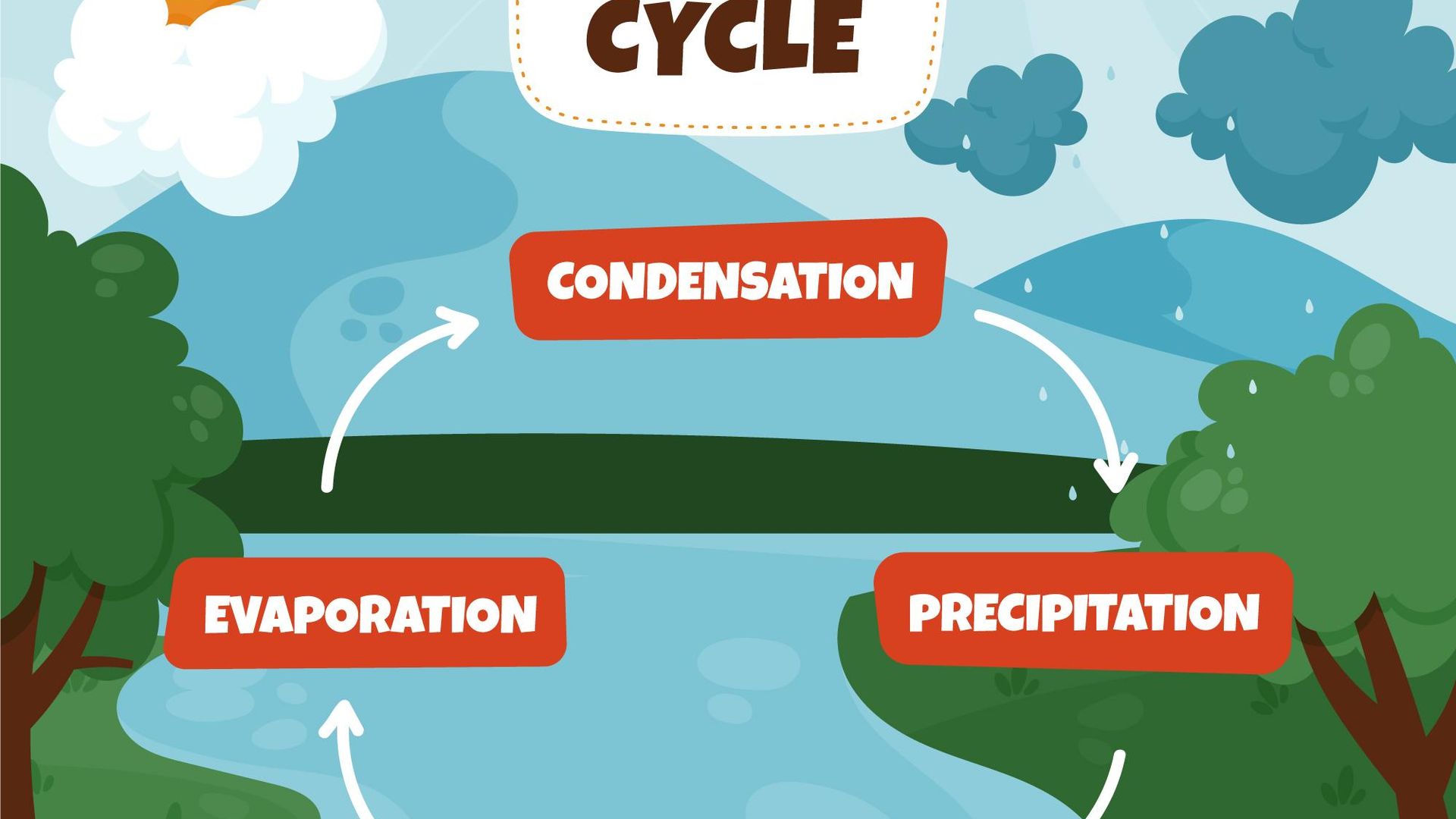
The cycle usually begins with evaporation. When water in places such as seas, reservoirs, puddles, or wet clothes gains heat, some of it changes from liquid water into water vapour. Water vapour is the gaseous state of water, and it rises into the air. Students often leave out the heat part, but that detail matters because evaporation does not happen “for no reason”. Water must gain heat for this change of state to occur.
Next comes condensation. As water vapour rises and cools, it loses heat and changes from a gas back into tiny liquid water droplets. These droplets gather to form clouds. This is one of the most common exam-tested ideas because many children know clouds are involved but cannot explain how they form in proper science language.
When enough water droplets collect, they fall as rain. In simple PSLE terms, this is how the cycle continues: water evaporates, condenses, and returns to the Earth’s surface. The process then repeats. Some questions may also show the cycle through everyday situations, such as water on a plate, steam near a kettle, or droplets forming on a cold can.
What matters most is not drawing arrows from memory. It is being able to explain what changed, whether heat was gained or lost, and why that step happens.
How Weather Connects to the Water Cycle
This is the part many students miss: the water cycle is not just a textbook diagram. It helps explain everyday weather. Once your child sees that connection, the topic usually becomes easier to remember.
On a hot day, evaporation happens more quickly because water gains heat faster. That is why puddles dry up after rain and wet laundry dries faster in warm, windy conditions. In PSLE Science, students should also know that evaporation is affected by factors such as temperature, wind, and exposed surface area. So weather does not sit completely outside the topic — it helps explain why the rate of evaporation changes.
Rain formation also makes more sense when linked back to weather. Water vapour in the air cools, loses heat, and condenses into tiny droplets. As more droplets gather, clouds form. When the droplets become heavy enough, they fall as rain. If a question asks why rain forms after water vapour cools, your child should be ready to explain the sequence clearly instead of jumping straight to “because of clouds”.
The truth is that students often memorise keywords without connecting them. They know “sun means evaporation” and “cloud means rain”, but they do not explain the heat gain and heat loss between those stages. That is exactly where open-ended marks disappear.
A better way to study this topic is to link each weather observation to a process. Hot weather points to faster evaporation. Cooler air supports condensation. Rain shows that condensed water droplets have collected and fallen. Once your child starts thinking in that cause-and-effect way, the answers become much clearer.
The 3 Water-Cycle Mistakes That Cost Marks
Even when students recognise the diagram, they still lose marks on explanation questions. Usually, it comes down to three recurring mistakes.
1. Mixing up evaporation and boiling
These are not the same thing. In PSLE Science, evaporation happens at the surface of a liquid and can take place without the water boiling. A child who writes that puddles “boil away” on a hot day is using the wrong process. The correct idea is that the water gains heat and evaporates gradually into water vapour.
2. Forgetting that condensation is gas to liquid
Many students remember the word but not the actual change of state. They may write that water vapour “turns into gas” or simply say that clouds appear. That is too vague. A stronger answer explains that water vapour loses heat and changes into tiny liquid water droplets. That precision matters because PSLE markers look for the correct process, not a rough guess.
3. Giving memorised answers without explaining the cause
This is probably the biggest one. A child may write “rain forms because of condensation” and stop there. But honestly, that is often incomplete. A better answer explains that water vapour cools, loses heat, condenses into tiny droplets, and these droplets gather until they fall as rain.
You may notice the same issue in other PSLE Science topics too. Students sometimes know the label but cannot explain the process underneath it. That is why practising related process-based topics such as PSLE Science: Life Cycles and Living Systems can help them get used to clearer scientific explanations.
How to Revise Water Cycle and Weather Without Memorising Blindly
If your child keeps rereading the same notes but still cannot answer open-ended questions well, the problem is usually not effort. It is the revision method. For a topic like this, passive memorising does not hold up under exam pressure.
Start with the diagram, but do not stop there. Ask your child to cover the labels and explain the full process aloud: water gains heat and evaporates, water vapour rises, cools, loses heat, condenses into tiny droplets, and eventually falls as rain. If they can say the sequence clearly without prompts, that is already a big win. If they hesitate, you have found the weak point quickly.
Next, use short cause-and-effect drills. Ask questions such as:
- Why do puddles disappear after rain?
- Why do droplets form on a cold surface?
- Why do clothes dry faster on a hot and windy day?
These questions train the exact thinking PSLE Science wants. They also fit nicely into a broader PSLE Complete Guide revision plan because the same habit of explaining causes and processes helps across multiple PSLE topics.
It also helps to compare this topic with other content areas so your child learns to adapt, not just repeat. For example, after revising the water cycle, switch to another process-heavy topic like PSLE Science: Magnets and Electricity and see whether they can still explain ideas clearly using proper keywords. That jump matters more than it looks.
One more practical tip: get your child to write one- or two-sentence answers, not just label diagrams. PSLE questions often reward precise explanation, and that takes practice. The goal is not just recognising the water cycle. It is explaining it confidently in exam language.
When Extra Support Helps
Sometimes the issue is not that your child has never seen the topic before. It is that they can recognise the diagram but cannot explain the process clearly under timed conditions. Sound familiar? That usually shows up in answers that are half-right but missing the key science idea, such as heat gain, heat loss, evaporation, or condensation.
At home, a simple check is to ask your child to explain the water cycle without looking at notes. If they can only list keywords but cannot link the steps together, they probably need more guided practice. The same goes for children who do fine in MCQ but struggle with open-ended questions.
This is where structured support can help. A tutor can break the topic into smaller steps, correct weak explanations early, and give targeted practice instead of more random worksheets. If you are considering primary school tuition for your child, look for support that focuses on understanding and explanation, not just memorising model answers.
When your child needs more help across Science topics, getting matched with the right support can make revision less frustrating and more focused.
Ready to find the right tutor for your child? Our matching service connects you with experienced tutors who fit your specific needs.
Get Matched with a Tutor in 24 Hours
Join 5,000+ families who found their perfect tutor through TutorBee. No agency fees, 100% verified tutors.
Related Articles

PSLE Math: Mastering Fractions and Ratios
Master PSLE Math fractions and ratios with proven techniques. Covers conversions, word problems, and the fraction-ratio connection that trips up most P6 students.

PSLE Higher Chinese: Is It Worth Taking?
PSLE Higher Chinese can support SAP school options and later language pathways. Learn when the added workload makes sense for you or your child in Primary 6.

PSLE Math: Model Drawing Complete Guide
PSLE Math model drawing helps children turn tricky problem sums into clear bar models. Learn when to use it, how it works, and what mistakes to avoid.