Online Tuition in Singapore — 1-to-1 Lessons with Verified Tutors
Your child needs help, but the calendar says otherwise. Between CCA, school, and the ride across the island, an extra two hours a week for a tutor can feel impossible to find.
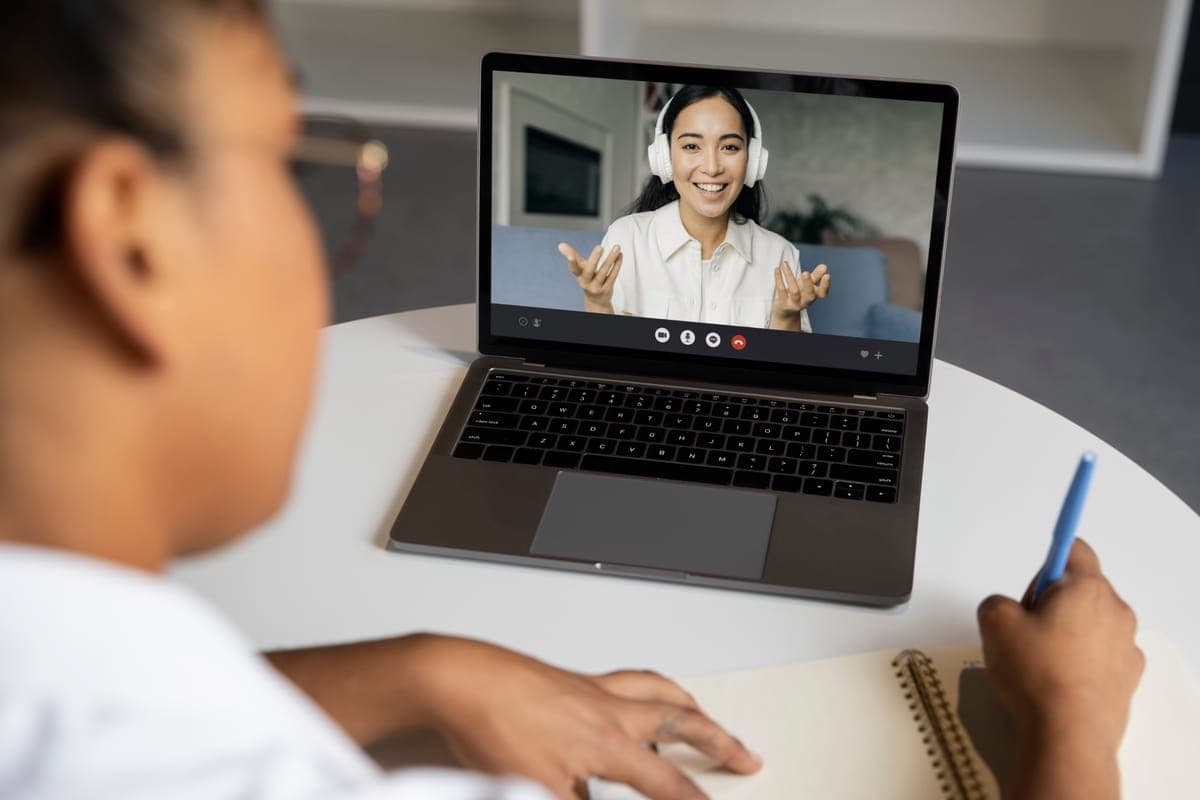
Online tuition removes the travelling from the equation. Your child gets the same 1-to-1 attention from a qualified tutor, at the same hourly rates as home tuition, over Zoom, Google Meet, or whatever platform the tutor prefers. You tell us the level and the subject, we match you with the right tutor, and lessons happen from the desk your child already sits at.
No agency fees. No contract. No travel, for you or for the tutor.
You ask for it on the request form, and everything after that is the same as home tuition.
The request form asks one question that decides the rest: “Where should lessons happen?” You have four answers — At my home, Online, At a tuition centre, or Either — home or online. Pick Online and the form stops asking you for an area, because an online lesson doesn't have one. Your postal code becomes optional and stays optional; nothing on our side treats a missing postal code on an online request as a gap.
That last option matters more than it looks. Either — home or online tells us you're open to both, which widens the pool of tutors we can match you with — and lets you settle the question with the tutor once you've met them, rather than guessing now.
Level, subjects, how often, your budget, and Online as the lesson mode. If you have preferences about the tutor — a current or former MOE teacher, a specific gender, particular timings — the form has room for those too.
02
We match you.
Our team reads your request and finds a verified tutor who teaches that subject at that level and works online. Online requests go through exactly the same matching as home requests; nothing is downgraded or deprioritised because the lesson happens over video.
03
You connect with the tutor.
We come back to you with tutor matches within 24 hours. You and the tutor agree the platform, the times, and the rate directly. Most tutors work over Zoom or Google Meet; some prefer another platform, and that's settled between you before the first lesson.
There is nothing to install on our side, no portal to sit inside, and no fee to us at any point. You pay the tutor for lessons taught, and that's the whole arrangement.
Online tuition costs the same as home tuition — $25 to $130 per hour, depending on your child's level and the tutor's background. We don't publish a separate online price list, because online lessons aren't a cheaper product. It's the same tutor teaching the same 1-to-1 hour.
Online Tuition Rates in Singapore (2026)
Level
Part-Time Tutor
Full-Time Tutor
MOE / Ex-MOE Teacher
Lower Primary (P1–P3)
$25–$35
$35–$45
$55–$70
Upper Primary (P4–P6)
$30–$40
$45–$55
$60–$85
Lower Secondary (Sec 1–2)
$30–$40
$45–$55
$60–$85
Upper Secondary (Sec 3–5)
$35–$45
$50–$60
$65–$95
JC 1–2 / A-Level
$50–$65
$70–$90
$100–$130
IB Diploma (DP)
$55–$70
$70–$100
—
Scroll the table sideways to see every column.
Per hour, 1-to-1. For every level — including IB PYP and MYP, IGCSE, polytechnic and university — see the full breakdown on our tuition rates page.
What online actually changes about the price:
not the rate, but who you can afford to consider. A tutor in Punggol who would never take a Jurong assignment will take an online one, because there's no hour of travelling attached to it. If you live somewhere tutors are reluctant to travel to, going online usually widens your options at the same money rather than cheapening them.
What it doesn't change:
what drives the rate. A part-time undergraduate charges less than a full-time tutor, who charges less than a current or former MOE teacher, online or otherwise. Higher levels cost more because fewer tutors are qualified to teach them.
Any subject can be taught online with a decent camera and a tutor who knows how to use one. But some work noticeably better than others — the ones built on explanation, worked examples, and marked practice rather than on physical equipment.
Online Chemistry Tuition
Chemistry rewards online teaching more than most subjects. Mole calculations, reaction mechanisms, and organic pathways are exactly the kind of thing that's clearer on a shared screen than on a notepad between two people — the tutor can annotate a mechanism step by step, zoom into the part your child lost the thread on, and leave the annotated file behind for revision.
The trade-off is practical work. Lab technique needs a lab; a tutor can talk your child through the reasoning behind an experiment and the way results are written up, but they can't hand them a burette over Zoom. For the theory and the problem-solving, online loses nothing. See our chemistry tuition page for the topic-by-topic detail.
Online Maths Tuition
Maths online lives or dies on one thing: whether the tutor can see your child's working. That's a camera-angle problem, not a subject problem, and it's solved with a phone propped over the desk or a cheap writing tablet.
Get that right and maths is one of the strongest online subjects. The tutor watches the working appear in real time, catches the wrong step at the moment it happens, and works through corrections on a shared whiteboard. For a Sec 3 student meeting A-Math for the first time, that live correction is most of the value. More on levels and topics on our math tuition page, and for Sec 1–5 specifically, secondary maths tuition.
IB & JC Subjects Online
At IB and JC level, going online often isn't a convenience — it's the only way to reach the right tutor at all. The pool of tutors who can teach H2 Chemistry, H2 Maths, or an IB Higher Level subject is small, and geography shrinks it further. Online removes that limit entirely.
These students also tend to be the best suited to it: older, self-directed, already working on a laptop, and comfortable sending a scan of an essay draft or an Internal Assessment section ahead of the lesson. See IB tuition and JC tuition for subject and scoring detail.
Online Tuition for Primary & Secondary Students
Online works well from upper primary onwards, and needs a nearby adult below that. The dividing line isn't the subject — it's whether your child can hold their own attention for an hour without someone in the room.
Primary.
A P5 or P6 student preparing for PSLE usually manages an online lesson fine, especially for maths and science where worked examples carry the session. Below P4, expect to be within earshot for the first few lessons — not teaching, just nearby to reseat a wandering child or unstick a frozen screen. Plenty of families do this happily; some decide after a fortnight that home tuition suits their child better, and that's a fair answer too. Our primary school tuition page covers what to expect at each level.
Secondary.
Sec 1 to Sec 5 is where online tuition is at its easiest. Students at this level are already doing homework on a laptop, can share a screen without help, and are old enough to say when they haven't understood something. It's also the level with the worst timetable pressure — CCA until 6pm, then dinner, then a tutor who'd need to cross the island — and where cutting the travelling out makes the difference between two sessions a week and one. See secondary school tuition for subject-level detail.
Both give your child a tutor's full attention for the whole hour. The differences are practical, and they're worth being honest about before you commit.
What changes
Online tuition
Home tuition
Travelling
None, either side
Tutor travels to you
Tutor pool
Anywhere in Singapore
Limited by how far a tutor will travel
Hourly rate
$25–$130
$25–$130 — the same
Supervision
You may need to be nearby for younger children
Tutor is in the room
Written working
Needs a camera angle or writing tablet
Tutor sees the page directly
Hands-on practice
Hard to replicate
Straightforward
Rescheduling
Easier — no journey to rearrange
Needs more notice
Scroll the table sideways to see every column.
When online is not the right fit
We'd rather you found this out here than three lessons in:
Your child is in lower primary and won't sit still.
A tutor on a screen has no way to redirect a six-year-old who has wandered off. Home tuition earns its money here.
Your home has no quiet corner.
An online lesson in a room with the TV on is worse than no lesson. A tutor who is physically present can hold a child's focus through the noise; a tutor on a laptop can't.
The connection drops regularly.
Ten minutes of a paid hour spent reconnecting is ten minutes you paid for.
The subject needs hands-on practice.
Lab work is the clear case, but the same applies to anything where the tutor needs to watch physical technique.
Your child has already had a full day of screens.
Some students shut down at the sight of another video call. If that's yours, don't fight it.
If you're genuinely unsure, pick Either — home or online on the request form. You keep both options open, we match you more widely, and you settle it with the tutor once you've met them.
What You Need for Online Lessons
Less than most parents expect. Nothing here costs much, and most homes already have all of it.
The essentials:
A laptop, desktop, or tablet.
A phone works in a pinch but is too small for a shared screen — your child will spend the hour squinting instead of learning.
A stable internet connection.
Home broadband is fine. If the lesson runs on mobile data, sit near the router or expect interruptions.
A headset or earphones with a microphone.
The single biggest improvement to an online lesson, and the cheapest. Laptop speakers echo, and echo makes tutors repeat themselves.
A quiet, well-lit place to sit.
A desk facing a wall beats a dining table facing the kitchen.
Worth having for maths and science:
A way to show handwritten working.
A phone on a cheap stand, angled over the page, is the simplest option. A basic writing tablet is better if your child has years of maths ahead of them.
Printed worksheets.
Ask the tutor to send anything they want worked through in advance. A child solving a problem on paper learns more than one typing into a chat box.
Before the first lesson: agree the platform with your tutor, open the link ten minutes early to check the camera and microphone, and swap phone numbers so a dropped connection doesn't cost you the session. Sort this out once and it never comes up again.
Most tutors teach over Zoom or Google Meet, and some prefer another platform they're used to. You and your tutor agree which one before the first lesson, so there's nothing for you to install in advance. There's no TutorBee app or portal your child has to sit inside.
A laptop, desktop, or tablet with a working camera, a stable internet connection, and earphones with a microphone. A phone is usable but too small for shared-screen work. For maths and science, add a way to show handwritten working — a phone propped over the page, or a basic writing tablet.
No — rates are the same, $25 to $130 per hour depending on level and tutor background. Online lessons aren't a cheaper product; it's the same tutor teaching the same 1-to-1 hour. What online does change is reach: tutors who wouldn't travel to your area will take an online assignment at their usual rate.
Yes, with the right camera angle. A phone on a stand pointed at the page lets the tutor watch the working appear line by line and catch a wrong step as it happens. A basic writing tablet does the same job more comfortably if your child has years of maths ahead of them.
Agree with your tutor beforehand how you'll handle it — usually a quick text and a rejoin within a minute or two. Swap phone numbers before the first lesson so a dropped call never ends a session. Tutors typically make up significant lost time rather than charging for it, but settle that with yours directly.
Yes. Nothing is locked in — there's no contract and no minimum commitment, so the arrangement is between you and your tutor. If you're unsure at the start, pick "Either — home or online" on the request form, which tells us you're open to both and widens the pool of tutors we can match you with.
No. When you pick Online on the request form, the postal code is optional and stays optional, and a missing one is never treated as an incomplete request. It's only worth filling in if you'd also consider a nearby tutor in person.
Yes — there's no separate pool. Every tutor is verified and screened the same way regardless of where lessons happen, and online requests go through the same matching process as home requests. You can ask for a current or former MOE teacher, a full-time tutor, or a part-time tutor for online lessons just as you would for home ones.
From upper primary, usually yes — P5 and P6 students preparing for PSLE generally manage an online lesson well, especially in maths and science. Below P4, plan to be within earshot for the first few lessons to help with focus and any technical hiccups. If your child can't hold attention for an hour without someone in the room, home tuition is the better fit.
That's between you and your tutor — recording isn't automatic and not every tutor is comfortable with it. Ask before the first lesson rather than mid-session, and agree what the recording is used for. Many tutors will instead send the annotated notes or worked solutions from the shared screen, which is often more useful for revision than a video.
Tell us your child's level, the subject, and how often you'd like lessons. Pick Online — or Either — home or online if you'd rather keep both open — and we'll come back with tutor matches within 24 hours.
Free matching. No agency fees, no contract, no minimum commitment. You pay the tutor for the lessons they teach, and nothing else.
.png)